NASCAR Betting Guide and Race and Championship Odds for 2026
Written by: Eddie Griffin
Last Update: Wed Oct 21, 2026, 9:10 am ET
Read Time: 19 minutes
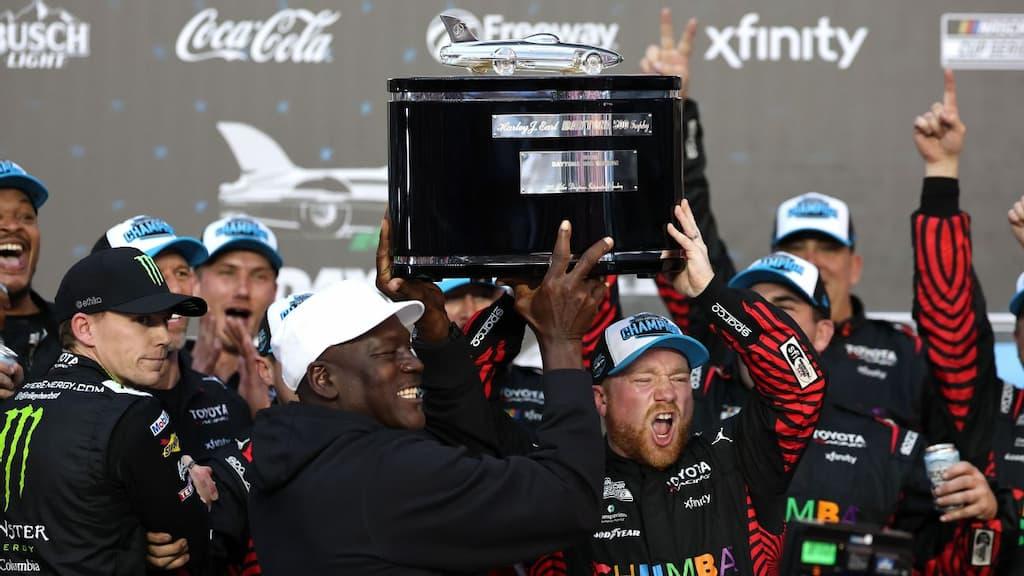
Stock car racing occupies a unique place on the American sports calendar, and NASCAR betting offers a compelling combination of accessibility, volume, and betting variety.
From February to November, the schedule delivers a bounty of betting opportunities across multiple series, track types, and formats. Top online sportsbooks such as Lucky Rebel, BetOnline, and Everygame have a variety of NASCAR odds each week, ranging from outright winner odds to finishing position bets and other prop bets.
This guide covers all three of NASCAR's national series, though it leans heavily into Cup Series betting while still providing context for the other two divisions. That is because most wagering action and the deepest markets are centered on the Cup Series.
Whether you are new to NASCAR betting or looking to sharpen your weekly approach, the goal here is simple: break down how the sport works, what markets are available, and how to find edges throughout the season.
2026 NASCAR Odds
Here, you can keep up with odds for the upcoming NASCAR Cup Series race, as well as Cup Series championship futures. If you are new to NASCAR betting, understanding how to read betting odds can help you interpret the prices and implied probabilities listed below.
Odds are from Lucky Rebel, where new players can get a 125% bonus up to $1250 to bet on NASCAR odds and much more. This welcome bonus also comes with 50 casino free spins to use on select online slots.
Odds to Win the Next NASCAR Cup Series Race (YellaWood 500 at Talladega, October 25)
Odds are as of Monday, October 19, 2026. Chase for the Cup drivers are in bold.
| Driver | Winner Odds | Implied Probability | True Probability |
| Joey Logano | +1000 | 9.09% | 6.82% |
| Ryan Blaney | +1000 | 9.09% | 6.82% |
| Austin Cindric | +1200 | 7.69% | 5.77% |
| Brad Keselowski | +1400 | 6.67% | 5.00% |
| Chase Briscoe | +1600 | 5.88% | 4.41% |
| Ty Gibbs | +1600 | 5.88% | 4.41% |
| Tyler Reddick | +1600 | 5.88% | 4.41% |
| Chase Elliott | +1800 | 5.26% | 3.95% |
| Denny Hamlin | +1800 | 5.26% | 3.95% |
| William Byron | +1800 | 5.26% | 3.95% |
| Bubba Wallace | +2000 | 4.76% | 3.57% |
| Carson Hocevar | +2000 | 4.76% | 3.57% |
| Christopher Bell | +2000 | 4.76% | 3.57% |
| Kyle Larson | +2000 | 4.76% | 3.57% |
| Chris Buescher | +2500 | 3.85% | 2.89% |
| Josh Berry | +2500 | 3.85% | 2.89% |
| Daniel Suarez | +2800 | 3.45% | 2.59% |
| Alex Bowman | +3300 | 2.94% | 2.21% |
| Ross Chastain | +3300 | 2.94% | 2.21% |
| Austin Hill | +4000 | 2.44% | 1.83% |
| Ryan Preece | +4000 | 2.44% | 1.83% |
| Todd Gilliland | +4000 | 2.44% | 1.83% |
| AJ Allmendinger | +5000 | 1.96% | 1.47% |
| Austin Dillon | +5000 | 1.96% | 1.47% |
| Connor Zilisch | +5000 | 1.96% | 1.47% |
| Erik Jones | +5000 | 1.96% | 1.47% |
| Michael McDowell | +5000 | 1.96% | 1.47% |
| Ricky Stenhouse Jr. | +5000 | 1.96% | 1.47% |
| Shane van Gisbergen | +5000 | 1.96% | 1.47% |
| Zane Smith | +5000 | 1.96% | 1.47% |
| Cole Custer | +6600 | 1.49% | 1.12% |
| John Hunter Nemechek | +6600 | 1.49% | 1.12% |
| Noah Gragson | +6600 | 1.49% | 1.12% |
| Riley Herbst | +6600 | 1.49% | 1.12% |
| Ty Dillon | +8000 | 1.23% | 0.93% |
| Josh Bilicki | +10000 | 0.99% | 0.74% |
Odds to Win the 2026 NASCAR Cup Series Championship
Odds are as of Monday, October 19, 2026.
| Driver | Championship Odds | Implied Probability | True Probability |
| Kyle Larson | -125 | 55.56% | 36.58% |
| Christopher Bell | +275 | 26.67% | 17.56% |
| Denny Hamlin | +325 | 23.53% | 15.49% |
| Chase Briscoe | +450 | 18.18% | 11.97% |
| Ryan Blaney | +700 | 12.50% | 8.23% |
| Joey Logano | +1400 | 6.67% | 4.39% |
| Tyler Reddick | +1400 | 6.67% | 4.39% |
| Austin Cindric | +15000 | 0.66% | 0.44% |
| Ty Gibbs | +15000 | 0.66% | 0.44% |
| Chase Elliott | +25000 | 0.40% | 0.26% |
| Bubba Wallace | +50000 | 0.20% | 0.13% |
| Carson Hocevar | +50000 | 0.20% | 0.13% |

What to Know About NASCAR in 2026
2026 Schedule Changes and New Tracks
The 2026 schedule features several meaningful additions and removals.
Three major new or returning venues reshape the calendar:
- Coronado Street Course (San Diego) debuts as a brand-new street race held on Naval Base Coronado, adding a new road-style event to the schedule
- North Wilkesboro Speedway (0.625 miles) returns as a points-paying Cup race for the first time since 1996
- Chicagoland Speedway (a 1.5-mile oval) returns to the Cup Series after a multi-year absence
At the same time, several recent or experimental events have been removed, as the Chicago street course, the Mexico City road course, and the Charlotte roval (replaced by a second Charlotte oval race) are all off of this year's schedule. These changes collectively tilt the schedule slightly back toward traditional oval racing.
The Chase for the Cup Returns
One of the most important structural shifts in 2026 is the return of the Chase for the Cup format.
Instead of the round-by-round elimination format that was in place for the last several seasons, the championship will once again be decided through a 10-race playoff stretch at the end of the season.
This group of races is intentionally diverse and includes a wide mix of track types, which creates a balanced championship test. From a betting perspective, this format places a premium on consistency more than the previous playoff format.
The important distinction for bettors is that Homestead is the season finale, not necessarily the championship decider. Depending on points entering the final race, the title could already be effectively wrapped up or still up for grabs.
That means the championship is shaped across the full 10-race playoff window, rather than being determined by a single winner-take-all event.
A Look Outside the Cup Series
Beyond the Cup Series, there's a lot to look out for in NASCAR's other two national series.
In the rebranded O'Reilly Auto Parts Series, Jesse Love seeks a second straight title, with 2024 series champion Justin Allgaier, Austin Hill, and young phenoms Brent Crews and Taylor Gray seen as his top competition for the crown.
In the Truck Series, the championship race is wide open with 2025 series champion Corey Heim now on a part-time schedule as he works toward a full-time Cup Series ride. Top Truck Series title contenders this season include Layne Riggs, Kaden Honeycutt, Chandler Smith, and 2024 series champion Ty Majeski.
2026 NASCAR Cup Series Schedule and Results
Regular Season Schedule and Results
NASCAR In-Season Challenge races in bold.
| Date | Race | Track |
| Feb. 15 | Daytona 500 | Daytona (Winner: Tyler Reddick) |
| Feb. 22 | Autotrader 400 | Atlanta (Winner: Tyler Reddick) |
| Mar. 1 | DuraMAX Grand Prix | Circuit of the Americas (Winner: Tyler Reddick) |
| Mar. 8 | Straight Talk Wireless 500 | Phoenix (Winner: Ryan Blaney) |
| Mar. 15 | Pennzoil 400 | Las Vegas (Winner: Denny Hamlin) |
| Mar. 22 | Goodyear 400 | Darlington (Winner: Tyler Reddick) |
| Mar. 29 | Cook Out 400 | Martinsville (Winner: Chase Elliott) |
| Apr. 12 | Food City 500 | Bristol (Winner: Ty Gibbs) |
| Apr. 19 | AdventHealth 400 | Kansas (Winner: Tyler Reddick) |
| Apr. 26 | Jack Link's 500 | Talladega (Winner: Carson Hocevar) |
| May 3 | Würth 400 | Texas (Winner: Chase Elliott) |
| May 10 | Go Bowling at The Glen | Watkins Glen (Winner: Shane van Gisbergen) |
| May 17 | NASCAR All-Star Race* | Dover (Winner: Denny Hamlin) |
| May 24 | Coca-Cola 600 | Charlotte (Winner: Daniel Suarez) |
| May 31 | Cracker Barrel 400 | Nashville (Winner: Denny Hamlin) |
| Jun. 7 | FireKeepers Casino 400 | Michigan (Winner: Denny Hamlin) |
| Jun. 14 | The Great American Getaway 400 | Pocono (Winner: Denny Hamlin) |
| Jun. 21 | Anduril 250 | Coronado Street Course (Winner: Corey Heim) |
| Jun. 28 | Toyota/Save Mart 350 | Sonoma (Winner: Shane van Gisbergen) |
| Jul. 5 | eero 400 | Chicagoland (Winner: Chase Briscoe) |
| Jul. 12 | Quaker State 400 | EchoPark Speedway (Winner: Ryan Blaney) |
| Jul. 19 | Window World 450 | North Wilkesboro (Winner: Joey Logano) |
| Jul. 26 | Brickyard 400 | Indianapolis (Winner: Corey Heim) |
| Aug. 9 | Iowa Corn 350 | Iowa (Winner: Ty Gibbs) |
| Aug. 15 | Cook Out 400 | Richmond (Winner: Joey Logano) |
| Aug. 23 | Mobil 1 301 | New Hampshire (Winner: Ryan Blaney) |
| Aug. 29 | Coke Zero Sugar 400 | Daytona (Winner: Ryan Preece) |
*The NASCAR All-Star Race is a non-points exhibition event.
Chase for the Cup
| Date | Race | Track |
| Sep. 6 | Cook Out Southern 500 | Darlington (Winner: Christopher Bell) |
| Sep. 13 | Enjoy Illinois 300 | Gateway (Winner: Kyle Larson) |
| Sep. 19 | Bass Pro Shops Night Race | Bristol (Winner: Joey Logano) |
| Sep. 27 | Hollywood Casino 400 | Kansas (Winner: Kyle Larson) |
| Oct. 4 | South Point 400 | Las Vegas (Winner: Chase Briscoe) |
| Oct. 11 | Bank of America 400 | Charlotte (Winner: Chase Briscoe) |
| Oct. 18 | Freeway Insurance 500 | Phoenix (Winner: Tyler Reddick) |
| Oct. 25 | YellaWood 500 | Talladega |
| Nov. 1 | Xfinity 500 | Martinsville |
| Nov. 8 | Straight Talk Wireless 400 | Homestead–Miami Speedway |
Where to Bet on NASCAR: Top NASCAR Betting Sites in 2026
NASCAR betting is widely available at sportsbooks that cater to U.S. players, and three of the most consistent options for odds coverage are Lucky Rebel, BetOnline, and Bovada. All three routinely post markets for Cup Series races and typically also offer odds for Xfinity and Truck Series events.
What separates strong NASCAR betting sites from the rest is not just availability, but depth. Outright winner odds are a given, but the better books will also feature head-to-head matchups, group betting, top-3 and top-10 finish props, and occasionally stage betting markets.
These added options are critical because outright winner bets alone can be volatile, especially when crashes and cautions can flip the race in seconds.
It's also worth noting that NASCAR odds often appear earlier in the week than bettors expect. Opening lines can be posted within 24–48 hours after the previous race ends, which creates opportunities for bettors who are quick to react to form, track history, or news developments.
NASCAR Track Types and Top Performers
Understanding how different tracks influence race outcomes is an important part of NASCAR betting. Drivers and teams have different strengths, and matching those strengths to track characteristics can help you identify promising wagers throughout the season.
Short tracks such as Bristol, Martinsville, and Richmond emphasize braking, tire management, track position, and execution. Experienced drivers like Kyle Larson, Denny Hamlin, and Ryan Blaney have performed well at these venues, while Christopher Bell and Chase Elliott are also worth considering for finishing position bets.
Intermediate tracks, including Charlotte, Darlington, and Homestead-Miami, generally reward teams capable of maintaining speed over long runs. Hamlin, William Byron, Bell, Larson, and Tyler Reddick are among the drivers to watch. Chris Buescher and Brad Keselowski can also be competitive in matchup and finishing position markets, depending on the track.
Drafting tracks such as Daytona, Talladega, and EchoPark Speedway (formerly Atlanta Motor Speedway) feature tightly packed racing and frequent changes in position. Multi-car crashes can eliminate favorites, while less-fancied drivers can contend for victories. This unpredictability makes longer-priced outright winner bets worth considering, although the risk remains substantial.
Road and street courses such as Circuit of the Americas, Watkins Glen, and Sonoma place a premium on braking, cornering, and technical precision. Shane van Gisbergen has emerged as the benchmark on these circuits, with Reddick, Elliott, Bell, Buescher, and Michael McDowell also worth evaluating.
Across every track type, consider recent performance, equipment, practice speeds, and available odds rather than assuming historical success guarantees another strong result.
Types of NASCAR Bets
NASCAR sportsbooks offer much more than outright race winner odds. From driver matchups and finishing position bets to stage props and live wagering, there are several ways to bet on a race without necessarily picking the winner.
Outright winner bets involve selecting the driver who will win a race. With large fields and the possibility of crashes, cautions, and mechanical problems, these wagers can be unpredictable. Longer-priced drivers may be worth considering at drafting tracks, while road courses can favor specialists.
Head-to-head matchups require you to pick which of two drivers will finish higher. These bets let you focus on a specific comparison rather than predicting the winner of the entire race.
Finishing position bets typically include top-3, top-5, and top-10 finishes. A driver doesn't need to win for these wagers to pay out, making them worth considering when evaluating consistent performers.
Group betting involves selecting the highest finisher from a smaller group of drivers. This market can be particularly useful when you have a strong opinion about drivers outside the leading contenders.
Manufacturer bets allow you to back Chevrolet, Ford, or Toyota to produce the race winner. Team strength, equipment, and performance at comparable tracks can influence these markets.
Stage and prop bets cover outcomes such as stage winners, fastest laps, and other race-specific performances. Availability varies by sportsbook, and these wagers often require closer attention to strategy and race conditions.
Finally, live betting allows bettors to place wagers after a race has started, where available. In-race odds can change following cautions, pit stops, position changes, and other developments.
Before wagering, compare sportsbook odds and review the settlement rules for your chosen market.

NASCAR Betting Strategy
Successful NASCAR betting starts with understanding how drivers, teams, and track conditions influence race outcomes. Rather than relying on name recognition or recent results alone, focus on the factors most relevant to each race and look for betting opportunities that align with your research.
Match drivers to track types. Driver strengths can vary considerably between short tracks, intermediate ovals, drafting tracks, and road courses. Outright winner bets and longshots may be worth considering at drafting tracks, while head-to-head matchups and top-10 finishes can be appealing at short and intermediate tracks. Road course specialists also deserve attention when evaluating potential winners and finishing position bets.
Evaluate practice and qualifying performance. Strong practice speeds and qualifying results can reinforce your assessment of a driver, particularly in matchup markets. Conversely, unexpected struggles may warrant a closer look. These indicators generally carry less weight at drafting tracks, where pack racing and unpredictable incidents can significantly influence results.
Consider equipment, consistency, and betting value. Strong teams often have advantages in equipment and preparation, so look beyond driver reputation when comparing contenders. Track-specific performance and recent trends can help identify promising selections, but the available odds remain important. Make a habit of line shopping and monitoring line movement throughout race week. Understanding how prices change can help you decide when to place your bets.
Finally, remember that even well-researched wagers can lose because of crashes, cautions, mechanical problems, or late-race restarts. Sound bankroll management and a balanced betting card can help you manage that uncertainty without chasing losses.
NASCAR Betting Tools and Resources
Successful NASCAR bettors know that good research goes beyond simply looking at the odds. Using the right betting tools and resources can go a long way towards having a profitable weekend or season. Statistics, race-week news, official NASCAR information, weather forecasts, and betting market analysis all play a role in evaluating a race before the green flag drops.
Fortunately, many of the best NASCAR betting resources are freely available. Alongside Betting News' NASCAR coverage, the following tools can help you research drivers, monitor developments throughout race week, and make more informed betting decisions all season long.
NASCAR Betting Coverage at Betting News
Betting News offers a variety of NASCAR betting resources designed to help bettors stay informed throughout the Cup Series season. Whether you are looking for the latest race odds, comparing sportsbooks, or learning more about NASCAR betting, you'll find everything in one place.
Our NASCAR coverage includes:
- NASCAR odds for every Cup Series race and championship futures
- NASCAR betting site reviews and sportsbook recommendations
- NASCAR betting guides covering odds, strategy, and wagering basics
- NASCAR schedules, standings, and other racing resources
While Betting News brings many of these resources together, experienced NASCAR bettors often supplement their research with several trusted industry websites.
NASCAR Betting Resources You Should Know
Beyond Betting News, several well-established NASCAR resources can help you analyze races, follow breaking news, and stay up to date throughout the season.
DriverAverages and Racing Reference
When it comes to statistical research, DriverAverages.com and Racing Reference are among the most valuable resources available to NASCAR bettors.
DriverAverages is one of the sport's premier statistical databases, allowing users to compare drivers using advanced metrics such as average finish, average running position, Driver Rating, laps led, stage points, green-flag speed, and performance by track or track type.
For bettors who value performance trends, it is an excellent resource for identifying drivers who consistently perform well at specific venues, even if those results aren't immediately obvious from the standings.
Racing Reference serves a different purpose by acting as NASCAR's historical archive. The site includes decades of race results, qualifying results, championship standings, driver statistics, and team records across the Cup Series, Xfinity Series, and Truck Series.
Whether you are researching a driver's career history at Bristol or reviewing past winners at Iowa, Racing Reference provides one of the most comprehensive historical databases in the sport.
Together, these two resources provide an outstanding statistical foundation for NASCAR betting research.
NASCAR.com and Jayski
Staying informed during race week is just as important as studying statistics, and NASCAR.com and Jayski are two of the most trusted sources for current information.
The official NASCAR website publishes schedules, entry lists, practice and qualifying results, race results, championship standings, penalties, and other official announcements throughout the season. It is the authoritative source for information released directly by NASCAR.
Jayski complements those official updates with extensive race-week coverage. Long regarded as one of the most respected independent NASCAR news outlets, Jayski tracks inspection reports, garage news, crew chief changes, backup cars, engine penalties, manufacturer announcements, and other developments that can influence betting markets before a race begins.
Checking both resources throughout the week can help bettors stay ahead of important news that may impact the odds.
Weather Resources
Weather can influence nearly every NASCAR race weekend, making reliable forecasts an important part of any bettor's research process.
The National Weather Service provides official forecasts, severe weather alerts, and radar information, while The Weather Channel and Weather Underground offer detailed hourly forecasts for race weekends. These resources can help bettors monitor changing conditions leading up to practice, qualifying, and race day.
They are also useful for keeping track of schedule changes, postponed sessions, or other weather-related developments that could affect betting markets before the race begins.
Odds Comparison Resources and Independent Betting Research
Finding value is not just about picking the right driver. It is also about getting the best available price.
Comparing NASCAR odds across multiple sportsbooks is one of the simplest ways to improve your long-term betting results, particularly in outright winner markets where prices can vary considerably from one sportsbook to another.
It is also worthwhile to compare your own analysis with expert opinions and consensus picks before placing a wager. While no prediction is guaranteed, reviewing multiple viewpoints can help confirm your strongest opinions or encourage you to take a second look at factors you may have overlooked.
No single website or tool will consistently identify winning bets on its own. The most successful NASCAR bettors combine statistical research, race-week news, weather forecasts, and market analysis to build a complete picture before placing their wagers.
NASCAR History and Information
What is NASCAR?
NASCAR, short for the National Association for Stock Car Auto Racing, is the leading stock car racing organization in North America. Unlike open-wheel racing formats such as Formula 1, NASCAR features heavier, less aerodynamic cars designed for close-quarters racing, frequent contact, and a wide range of track configurations.
The Cup Series represents the highest level of competition, featuring the sport's top drivers, teams, and manufacturers.
Below it sits the O'Reilly Auto Parts Series (the second-tier series formerly known as the Xfinity Series), often referred to as a proving ground for younger drivers, followed by the Truck Series, which features a mix of rising talent and experienced racers.
Races are held on a variety of track types. Each type presents different challenges and requires different skill sets, which is one of the reasons NASCAR betting offers so much variety and excitement.
NASCAR History
NASCAR's roots date back to the late 1940s, when organized stock car racing began to take shape in the southeastern United States. Over the decades, the sport has evolved into a national powerhouse, producing legendary drivers and iconic moments that have shaped its identity.
Among the most recognizable names in NASCAR history are Dale Earnhardt, known for his aggressive driving style and seven Cup Series championships; Richard Petty, whose 200 career wins remain unmatched; and Jeff Gordon, who helped bring the sport into the mainstream during the 1990s and early 2000s.
More recently, drivers like Jimmie Johnson have continued that legacy, matching Earnhardt and Petty with seven championships and dominating the modern era.
The introduction of the playoff system in the 2000s marked a significant shift in how championships are decided, adding a layer of drama and unpredictability that carries through to today's format.
NASCAR National Series Champions (2000–Present)
| Season | Cup Series Champion | Xfinity Series Champion | Truck Series Champion |
|---|---|---|---|
| 2025 | Kyle Larson | Jesse Love | Corey Heim |
| 2024 | Joey Logano | Justin Allgaier | Ty Majeski |
| 2023 | Ryan Blaney | Cole Custer | Ben Rhodes |
| 2022 | Joey Logano | Ty Gibbs | Zane Smith |
| 2021 | Kyle Larson | Daniel Hemric | Ben Rhodes |
| 2020 | Chase Elliott | Austin Cindric | Sheldon Creed |
| 2019 | Kyle Busch | Tyler Reddick | Matt Crafton |
| 2018 | Joey Logano | Tyler Reddick | Brett Moffitt |
| 2017 | Martin Truex Jr. | William Byron | Christopher Bell |
| 2016 | Jimmie Johnson | Daniel Suárez | Johnny Sauter |
| 2015 | Kyle Busch | Chris Buescher | Erik Jones |
| 2014 | Kevin Harvick | Chase Elliott | Matt Crafton |
| 2013 | Jimmie Johnson | Austin Dillon | Matt Crafton |
| 2012 | Brad Keselowski | Ricky Stenhouse Jr. | James Buescher |
| 2011 | Tony Stewart | Ricky Stenhouse Jr. | Austin Dillon |
| 2010 | Jimmie Johnson | Brad Keselowski | Todd Bodine |
| 2009 | Jimmie Johnson | Kyle Busch | Ron Hornaday Jr. |
| 2008 | Jimmie Johnson | Clint Bowyer | Johnny Benson |
| 2007 | Jimmie Johnson | Carl Edwards | Ron Hornaday Jr. |
| 2006 | Jimmie Johnson | Kevin Harvick | Todd Bodine |
| 2005 | Tony Stewart | Martin Truex Jr. | Ted Musgrave |
| 2004 | Kurt Busch | Martin Truex Jr. | Bobby Hamilton |
| 2003 | Matt Kenseth | Brian Vickers | Travis Kvapil |
| 2002 | Tony Stewart | Greg Biffle | Mike Bliss |
| 2001 | Jeff Gordon | Kevin Harvick | Jack Sprague |
| 2000 | Bobby Labonte | Jeff Green | Greg Biffle |
Conclusion
NASCAR betting offers something few other sports can match: consistent weekly action combined with a level of strategic depth that rewards preparation more than intuition. Across nearly every weekend of the season, bettors have new opportunities to evaluate drivers, track conditions, and market pricing.
The key takeaway from this guide is that NASCAR is not a one-dimensional betting sport. Astute bettors will benefit from understanding and applying their knowledge of drivers, teams, tracks, the championship format, and relevant historical context.
Outright winner bets will always draw attention, but as with betting on golf, long-term value and success lies in going below the surface and picking the right spots with matchup bets, finishing position bets, and smart prop picks.
Ultimately, NASCAR rewards discipline. Bettors who treat it like a weekly puzzle rather than a guessing game tend to find more consistent success, even with the potential of bad beats on a regular basis.
With a 36-race Cup schedule, multiple series running in parallel, and a wide variety of track styles, there is always another edge to find if you're willing to do the work.

Other Betting Information
Do you find our NASCAR betting guide useful? We aim to be a go-to NASCAR betting resource, so bookmark Betting News so you don't miss any of our content.
Learn More About Sports Betting and Other Types of Gambling
This guide is just one of many sports betting guides available at Betting News. If you want to learn or better understand a type of bet, how to bet on a sport, league, or event, or betting strategy, we have you covered.
Here are other guides we have for major leagues and competitions:
- NFL Betting Guide
- MLB Betting Guide
- NBA Betting Guide
- NHL Betting Guide
- College Football Betting Guide
- College Basketball Betting Guide
- Soccer Betting Guide
- Golf Betting Guide
- Tennis Betting Guide
- WNBA Betting Guide
- Formula 1 Betting Guide
- UFC Betting Guide
We also have many other hubs and guides connected to major events, including the FIFA World Cup, Super Bowl, March Madness, all of the Triple Crown horse races (the Kentucky Derby, Preakness Stakes, and Belmont Stakes), the College World Series, and the golf and tennis majors.
Do you love to play online slots, blackjack, roulette, and other popular online casino games? Check out our catalog of casino guides and learn all you need to know to play your favorite games at the best online casinos.
Do you like to play Texas Hold'em or Five Card Draw while competing for real money against other players around the world? Check out our online poker guides and explore our recommendations of top online poker sites.
Follow Betting News on Social Media
You can also follow Betting News on social media to keep up with our latest sports betting content, picks, analysis, and more.
Remember, sports betting and gambling of any kind should be for entertainment and enjoyment. Always bet responsibly and utilize good bankroll management.
But if you find yourself having trouble sticking to responsible gambling practices, take a step back and/or use resources such as the National Council on Problem Gambling to get the help you may need.
Learn More About the Best Online Sportsbooks
- Trusted Online Sportsbooks
 Lucky Rebel Sportsbook Review »
 BetOnline Sportsbook Review »
 Ybets Sportsbook Review »
 Everygame Sportsbook Review »
 SportsBetting Sportsbook Review »
 Bovada Sportsbook Review »
 BetNow Sportsbook Review »
 Bet105 Sportsbook Review »
 SportBet Sportsbook Review »
 BetWhale Sportsbook Review »
 BetUS Sportsbook Review »
 MyBookie Sportsbook Review »
-
 Bookmaker Sportsbook Review »
-
 WagerWeb Sportsbook Review »